Pickleball paddles for beginners: what to buy first
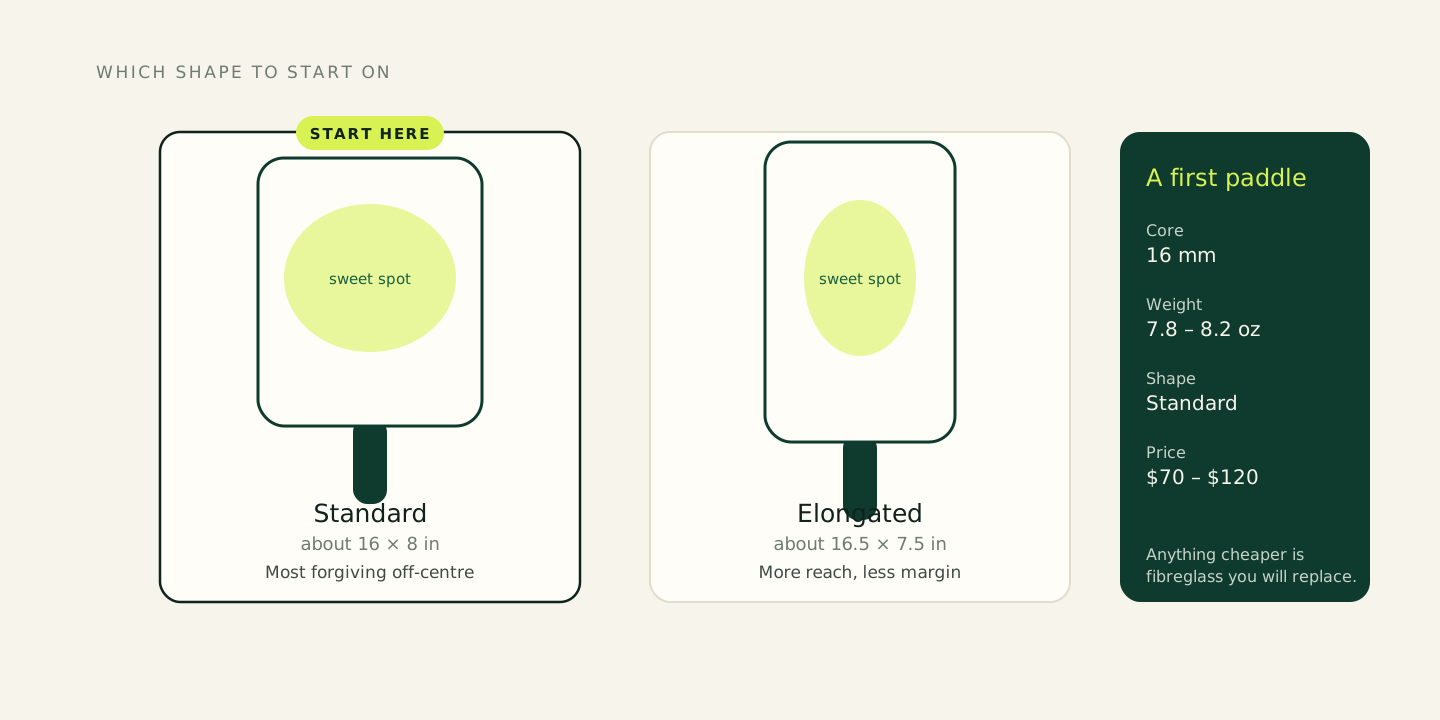
Standard shape, 16mm core, 7.8–8.2 oz. Almost every good first paddle is in that box.
The right pickleball paddles for beginners are boring, and that is the point. A first paddle should be a 16mm core, a standard shape, somewhere between 7.8 and 8.2 ounces, and a grip that actually fits your hand. Every paddle meeting that description plays within a few percent of every other one, and none of them cost more than $120.
What follows is how to pick inside that box, and what the marketing around it is worth.
The four specs to check, in order
1. Grip size. Measure from the middle crease of your palm to the tip of your ring finger. That is roughly your grip circumference — about 4 in for most women, 4 ⅛ to 4 ¼ for most men. Get this wrong and you will squeeze the handle, which kills touch and causes elbow pain. Buy slightly small if you are between sizes; an overgrip adds 1/16 in.
2. Weight, 7.8–8.2 oz. Heavy enough not to get pushed around, light enough to react at the kitchen. You can add lead tape later; you cannot remove weight.
3. 16mm core. More flex, more dwell time on the face, more forgiveness on off-centre hits. Thin cores hit harder, and hitting harder is not your problem at 3.0.
4. Standard shape. Roughly 16 × 8 inches. The widest sweet spot of any shape. Elongated paddles give reach, and take away the margin you need while you are still learning where the middle of the face is.
Full detail on what each spec changes is in how to choose a pickleball paddle.
What to ignore for now
- Spin numbers. Published RPM figures come from unstandardised testing. Raw carbon grips the ball more than fibreglass; beyond that, the number is marketing.
- Pro endorsements. A pro’s paddle is built for a 4.5+ swing.
- Thermoformed vs cold-pressed. A real construction difference that shows up in durability and edge stiffness, and one you will not feel at 3.0.
- Elongated shapes and “power” models. Both trade the forgiveness you need.
What a $70–$120 paddle actually gets you
At this price, from an established brand, you should get: a 16mm polymer honeycomb core, a raw carbon or graphite face, a proper edge guard, and a manufacturer’s warranty. That is the whole functional package. USA Pickleball approval should be on the listing — check it if there is any chance you will play a tournament.
Below about $60 you are usually buying a fibreglass face on a thin core. It will feel powerful in a store and uncontrollable on a court, and you will replace it within a season. The exception is a starter set — two paddles, balls and a bag for $80 — which is a reasonable way to get two people playing, as long as you treat the paddles as disposable.
The paddle-set question
Sets are how most people start, and there is nothing wrong with that. Just know what you have: set paddles are almost always fibreglass-faced and light, and they are fine for the first month while you find out whether you like the sport. Replace them once you can rally, not before.
Grip build-up and the one modification worth making
If your grip is slightly small, add an overgrip — it is a $5 fix that changes how the paddle feels more than a $200 upgrade would.
The only other modification worth doing early is a strip of lead tape at 3 and 9 o’clock on the face, about 3 grams a side. It widens the effective sweet spot and stabilises the paddle against off-centre hits. Do it after a month, once you know where you are actually contacting the ball.
When to upgrade
Upgrade when a specific shot is failing for a reason you can name and the paddle is the reason. “My resets pop up because the paddle is too poppy” is a reason. “I lost three games” is not.
For most people that is somewhere around a year in, at 3.5, and the upgrade is usually to a thermoformed carbon paddle in the $150–$200 band. Until then, put the money into court time and shoes — the shoes are what protect your ankles, and they wear out on a schedule the paddle does not.
Common questions
What pickleball paddles are best for beginners?
A standard-shape paddle with a 16mm polymer core and a raw carbon face, weighing 7.8 to 8.2 ounces, in a grip size that matches your hand. Any established brand sells one in the $70 to $120 band, and the differences between them at that price are small.
How much should a beginner spend on a pickleball paddle?
Between $70 and $120. Below that you are usually buying a fibreglass face and a thin core that you will replace within a few months. Above it you are paying for construction refinements a beginner cannot use yet.
Should a beginner use a 14mm or 16mm paddle?
16mm. The thicker core flexes more, absorbs pace, and makes soft resets and third shot drops far more forgiving. A 14mm core adds power you do not yet need and takes away the control you are trying to build.